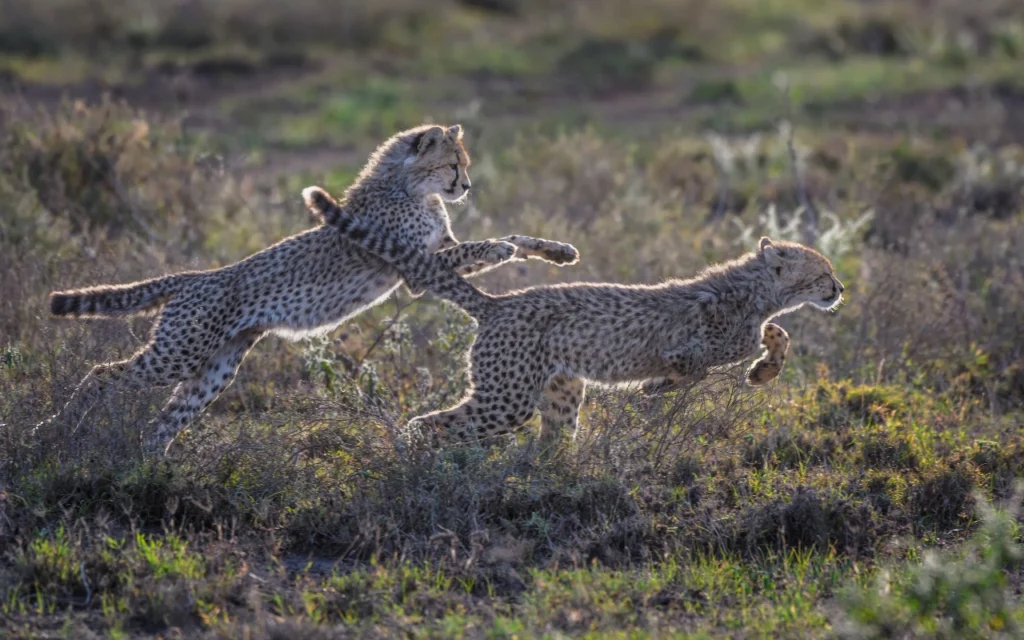
Ruaha National Park is Tanzania’s largest national park and one of the wildest, quietest places to go on safari in East Africa. It covers over 20,000 square kilometres of rugged bush, baobab studded hills and the wide open channel of the Great Ruaha River. If you want the classic African wilderness feeling without the traffic jams of the Northern Circuit, this is the park to see. This guide is written by the team at HHM Wildlife Safaris. We run Ruaha trips from our base in Mikumi and know the park’s rhythms, roads and camps first hand. Here is everything you need to plan the trip properly.
What is Ruaha National Park?
Ruaha National Park is a wildlife reserve in central southern Tanzania, part of the wider Rungwa Ruaha ecosystem. At more than 20,000 square kilometres, it is the largest national park in the country and one of the largest in Africa. Its landscape mixes riverine forest, open savanna, granite outcrops and baobab woodland, giving it a raw wilderness feel that many travellers describe as their favourite park in Tanzania.
The park is home to around 10 percent of the world’s remaining lions, one of the largest elephant populations in East Africa, and a healthy resident population of African wild dogs. Big herds of buffalo, giraffe, greater and lesser kudu, sable and roan antelope all share the ecosystem. Ruaha sits at a natural crossroads between the miombo woodland of southern Africa and the acacia grasslands of eastern Africa, which is why the species mix here is so unusual.
Ruaha became a full national park in 1964, and was expanded in 2008 to absorb the Usangu Game Reserve. Despite its size and richness, it receives only a small fraction of the visitors that the Serengeti sees.
Where is Ruaha National Park and how do you get there?
Ruaha National Park is located in Iringa Region, in central southern Tanzania. The main gate is about 130 kilometres west of Iringa town and roughly 620 kilometres from Dar es Salaam. Most travellers reach it either by light aircraft or as part of a longer road trip through the Southern Circuit.
You have two practical ways to reach the park:
- By light aircraft. This is the most popular option. Daily scheduled flights run from Dar es Salaam, Zanzibar, Selous and Arusha to Msembe airstrip inside the park. Flight time from Dar es Salaam is about two hours. Coastal Aviation and Auric Air are the main operators.
- By road from Dar es Salaam or Mikumi. The full drive from Dar es Salaam takes about 10 hours on tarmac, usually broken with a night at Mikumi or Iringa. From Mikumi to the park gate is a five to six hour drive. Road transfers work well if you want to combine Mikumi, Udzungwa and Ruaha in one trip.
Many travellers pair Ruaha with Mikumi and Nyerere for a full Southern Circuit safari. We often route clients out to Ruaha by air and back overland via Mikumi, which balances comfort with the flexibility to combine multiple parks. Read our Mikumi National Park guide for more on how the two connect.
What wildlife will you see in Ruaha?
Ruaha is exceptional for big cat and elephant viewing. The park protects one of the largest lion populations in Africa, unusually large prides that hunt buffalo. Leopards are widely present. Cheetah are less common but resident. African wild dogs move through the park in packs, and Ruaha is one of the best places in Tanzania to see them.
The Big Five in Ruaha
Ruaha has four of the Big Five. Lion, leopard, elephant and buffalo are all resident and readily seen in the dry season. Rhino are not present. If seeing the full Big Five matters to you, combine Ruaha with the Ngorongoro Crater on a longer itinerary.
Elephants and buffalo
Ruaha holds one of the biggest elephant populations in East Africa, with herds that can number over 100 animals gathering along the Great Ruaha River in the dry months. Buffalo herds of several hundred are common, and they are the primary prey for the park’s famous lion prides.
Predators of Ruaha
What makes Ruaha special for many travellers is the predator viewing. Lions are found in almost every part of the park, in prides that can exceed 20 members. Leopard sightings along the river drainages are frequent. African wild dogs are seen most reliably from June through October when they pup in known den sites. Spotted hyena are common and often heard at night from camp.
Antelope diversity
Ruaha’s position between southern and eastern African ecosystems gives it an antelope diversity that few parks match. You can see greater kudu, lesser kudu, sable, roan, eland, hartebeest, waterbuck, reedbuck, and impala, sometimes all in a single day. This alone makes Ruaha a favourite for repeat safari travellers.
Birds in Ruaha
Over 570 bird species have been recorded in the park. Highlights include the Eleonora’s falcon, black collared barbet, violet crested turaco, ashy starling and the rare Ruaha red billed hornbill, a species found only in this region. The riverine forest along the Great Ruaha River is particularly productive for birding.
When is the best time to visit Ruaha National Park?
The best time to visit Ruaha National Park is between June and October, during the long dry season. Water is scarce, vegetation is thin, and wildlife concentrates along the Great Ruaha River and its tributaries. Predator viewing peaks in September and October. Nights are cool, days are dry and sunny.
Here is what to expect through the year:
- June to August: Cool, dry, excellent all round game viewing. Wild dogs often denning.
- September to October: Peak dry season. Wildlife concentration along the river is extreme. Very hot in October.
- November: Short rains arrive. Landscape greens up. Migratory birds return.
- December to February: Green season. Good bird watching and photography. Some off road access limited.
- March to May: Long rains. Many camps close. Not recommended for a first safari.
For a full year round breakdown, see our guide to the best time to visit Tanzania for a safari.
How much does a Ruaha safari cost?
A Ruaha safari costs anywhere from 400 to 900 US dollars per person per day, depending on the camp standard, group size and whether you fly or drive. Ruaha is more expensive than Mikumi because most travellers fly in, camps are more remote, and lodge rates are higher. A typical three night mid range fly-in trip works out around 2,500 to 3,500 dollars per person, all in.
Your main costs on a Ruaha trip are:
- Park entry fees. Currently 35.40 US dollars per adult per day, and 17.70 for a Land Cruiser vehicle entry. Fees are collected by TANAPA and change from time to time.
- Accommodation. Budget camping is 40 to 60 dollars per person. Mid range tented camps are 300 to 500 per person all inclusive. Luxury camps range from 700 to 1,500 dollars per person.
- Flights. Return flights from Dar es Salaam to Msembe cost around 400 to 500 dollars per person. Coming from Zanzibar or Arusha adds a leg.
- Vehicle and driver-guide. Most fly-in camps include game drives in a shared vehicle. Private vehicles add 200 to 300 dollars per day.
- Concession and community fees. Some camps add a small concession fee. Ask for a full quote breakdown.
We publish live prices and full inclusions on our Ruaha National Park page. Every quote we send you is customised to your group, dates, and preferred lodging standard.
How many days do you need for a Ruaha safari?
Three nights is the minimum we recommend, and four to five nights gives you a much richer experience. Ruaha is huge, and travellers who stay too short a time miss the sense of scale and the slow rhythm of the wilderness. Fly-in itineraries almost always work better as three or four night stays than as quick two night visits.
Here is how the standard trip lengths break down:
- Three nights: The minimum. Two full days of game drives, one arrival and one departure day. Good for a first Ruaha experience.
- Four nights: The sweet spot. Adds a full day and lets you cover both the river area and the more remote miombo woodland.
- Five or more nights: Ideal for photographers, birders, and anyone who wants a proper wilderness experience with time for slow mornings and long lunches.
Many travellers combine Ruaha with two or three nights at Mikumi and two nights at Nyerere for a full Southern Circuit trip. Reach out through our contact page if you would like us to draft this kind of itinerary.
Where should you stay in Ruaha National Park?
Ruaha has fewer camps than the busier Northern Circuit parks, which is part of its charm. Most sit along the Great Ruaha River and its tributaries, giving you elephant and hippo sightings from your tent.
Luxury camps
Jabali Ridge, Kigelia Ruaha and Ikuka Safari Camp are the standout luxury properties. Jabali Ridge in particular is one of the most talked about safari camps in Tanzania, with its perched design overlooking a rocky valley. Rates typically start around 900 dollars per person per night.
Mid range camps
Ruaha River Lodge is the classic mid range option, right on the river with elephants often drinking within view of your veranda. Mwagusi Safari Camp is another well loved choice with more traditional tented style. Both work well for travellers who want authentic bush without ultra premium pricing.
Budget options
Budget travellers can use the public TANAPA campsite near park headquarters, or stay outside the park in Iringa and drive in for day trips. This works better for road-based itineraries than for fly-in trips.

What activities can you do in Ruaha?
Game drives are the main activity, with most camps offering both morning and afternoon drives in open sided Land Cruisers. Longer full day drives with picnic lunches let you reach the remote southern sectors that most short stays never see.
Other activities include:
- Walking safaris. Ruaha is one of the few Tanzanian parks where walking safaris with an armed ranger are permitted. This is a highlight for many travellers.
- Night drives. Some camps in the concessions on the park edge offer night drives, letting you spot leopard, civet, genet, and porcupine.
- Cultural visits. Barabaig and Maasai communities near the park welcome respectful visitors. This is a great way to add depth to the trip.
- Baobab photography. The park’s baobab studded landscape is one of the most photogenic in East Africa. Golden hour drives among the huge trees are unforgettable.
How does Ruaha compare to Serengeti?
Ruaha and Serengeti are both world class safari parks with very different characters. Serengeti has the wildebeest migration, higher predator density, and better known lodges. Ruaha has bigger elephant herds, better wild dog viewing, dramatically fewer visitors, and a rawer wilderness feel. Ruaha is also usually cheaper per night for equivalent lodge standards, though flights add cost.
If it is your first Tanzania safari and you want the big set piece experience, choose the Northern Circuit with Serengeti and Ngorongoro. If you have already done the Northern Circuit, or you value quiet and wilderness over famous names, Ruaha will be the highlight of your safari career.
Ruaha is not a beginner’s safari destination in the sense of being difficult. It is a beginner’s paradise in every other way. The wildlife is abundant, the guiding is excellent, and the camps are of high quality. What makes it feel advanced is simply how few other vehicles you share it with. That is the real reward.
How to plan your Ruaha safari step by step
Ruaha planning follows the same basic pattern as any Tanzania safari, with a few Ruaha specific considerations.
- Pick your dates. Aim for July to October if you can. Book flights and lodges together.
- Decide fly-in or road. Fly-in is more comfortable and saves days. Road works if you are combining with Mikumi and Udzungwa.
- Set your accommodation level. Mid range and luxury camps sell out first. Book at least six months in advance for peak season.
- Add a second park. Almost every Ruaha trip benefits from adding two nights at Mikumi or Nyerere for variety.
- Contact a local operator. A Tanzania based team can negotiate lodge rates and internal flights that foreign booking sites cannot match.
- Confirm inclusions. Park fees, concession fees, drinks, laundry and airport transfers all vary by camp. Ask for a complete breakdown.
- Pack for real bush. Neutral colours, closed shoes, warm layers for morning drives, and a proper camera with a long lens.
Why choose HHM Wildlife Safaris for your Ruaha trip?
HHM Wildlife Safaris is based in Mikumi, in southern Tanzania, and we run Ruaha safaris regularly. That means you are working directly with a team who knows the park, the camps, the guides and the routes, not a foreign call centre passing your booking down a chain.
What you get with us:
- Direct contact with the team who will run your safari, from planning to pick-up.
- Tailor made itineraries that combine Ruaha with Mikumi, Nyerere, Udzungwa, or Zanzibar as needed.
- Honest advice on which camps suit your budget and travel style.
- TANAPA licensed guides with deep knowledge of Ruaha’s wildlife and terrain.
- Well maintained 4×4 Land Cruisers with open roofs for photography and viewing.
- Fast responses on WhatsApp during Tanzania business hours.
Learn more about the team on our About page.
Ready to plan your Ruaha safari?
A Ruaha safari is one of the great wilderness experiences left in Africa. The park is vast, wildlife is abundant, and the atmosphere is unlike anywhere on the Northern Circuit. If you would like a custom itinerary and quote for your dates, we would love to help you plan the trip properly.
Send us a message on our contact page or WhatsApp us on +255 621 080 188. Include your travel dates, group size, preferred accommodation standard, and any specific interests such as photography, walking safaris or birding. We will draft a full itinerary with pricing and options for you to review, and there is no obligation to book.
Frequently asked questions
Is Ruaha better than Serengeti?
Ruaha and Serengeti offer different experiences. Serengeti has the migration and higher visitor numbers. Ruaha offers more solitude, bigger elephant herds and better wild dog sightings. Many experienced safari travellers rate Ruaha as their favourite park in Tanzania precisely because it feels wild and uncrowded.
How do you get to Ruaha National Park?
Most travellers fly in on a two hour scheduled light aircraft from Dar es Salaam, Zanzibar, Selous or Arusha to Msembe airstrip inside the park. It is also possible to drive from Mikumi in about six hours or from Dar es Salaam in about 10 hours, usually broken with an overnight stop.
Is Ruaha good for a first safari?
Yes, Ruaha works well as a first safari for travellers who want quality wildlife viewing without crowds. The guiding is excellent, the camps are comfortable and the wildlife is easy to find in the dry season. First timers on tighter budgets often start with Mikumi and add Ruaha on a second trip.
Can you see wild dogs in Ruaha?
Yes, Ruaha is one of the best places in Tanzania to see African wild dogs. Packs are seen most reliably between June and October, especially when they are denning. Ask your guide about recent sightings on arrival, as their movements shift throughout the season.
How safe is Ruaha National Park?
Ruaha is very safe. Camps are staffed with trained rangers, guides handle all wildlife interactions, and the park is patrolled. As in any wildlife area, follow your guide’s instructions, stay in your vehicle unless permitted otherwise, and keep food secured. Malaria is present, so take antimalarials and use repellent.
What is the entry fee for Ruaha National Park?
Non resident adults currently pay 35.40 US dollars per person per day, plus VAT. Children aged five to fifteen pay a reduced rate. Vehicle entry is 17.70 dollars per Land Cruiser per day. Fees are set by TANAPA and can change. Your operator will include current fees in your quote.
Can you combine Ruaha with Zanzibar?
Yes, this is a popular combination. Fly from Zanzibar to Ruaha via Dar es Salaam, spend three or four nights in the bush, and return to the coast for the second half of your trip. Total travel time between the two is about a day each way including transfers.
How many days should you spend in Ruaha?
Three to four nights is ideal for most travellers. Three nights gives you two full days of game viewing, which is the practical minimum. Four or five nights allows time for walking safaris, longer game drives into the remote sectors, and a slower rhythm that suits the scale of the park.