The best time to visit Tanzania for a safari is between late June and October, during the long dry season. Grass is short, water is scarce, and wildlife gathers around rivers and waterholes. Skies stay blue, mornings are cool, and roads are firm. This is peak safari season across the whole country. That said, every month of the year has something to offer if you know what to look for. This guide is written by the team at HHM Wildlife Safaris. We live in Mikumi and run trips year round, so we know what each month actually feels like on the ground, not just what a travel brochure says.
What are Tanzania’s seasons for safari?
Tanzania has two dry seasons and two wet seasons. The long dry season runs from June to October and is the peak safari time. The short rains fall in November and early December. A short dry spell follows in January and February. The long rains arrive in March and last through May.
Understanding this rhythm helps you match your travel dates to what you want to see. Wildlife viewing is best when it is dry. Photography is best when the landscape is green. Prices are lowest when most travellers stay home. The trade-offs matter, and we will walk through them month by month.
Which month is the very best for a Tanzania safari?
August is the single best month for a Tanzania safari. The dry season is at its peak, the wildebeest migration is crossing the Mara River in the northern Serengeti, and predator sightings are at their most reliable. The catch is that August is also the most expensive month, and the most popular lodges book up a year in advance.
If August is out of budget or unavailable, July and September give almost identical wildlife viewing at slightly lower prices. June is quieter still, though the migration is further south in the western corridor.

Tanzania safari month by month
Here is a full breakdown of each month, what the weather does, where the migration is, and what the trip is like on the ground.
January in Tanzania
January is a short dry window between the two rainy seasons. Skies are mostly clear, days are warm, and the landscape stays green from the November rains. The wildebeest migration reaches the southern Serengeti and Ndutu area for calving season, which begins in late January or early February. Predator action is intense as lions and hyenas target new calves.
This is a very good month for a Tanzania safari, particularly for photographers and for travellers who want to see the calving migration without the July or August crowds. Southern Circuit parks like Mikumi, Ruaha and Nyerere are also excellent, with lush landscapes and strong game viewing.
February in Tanzania
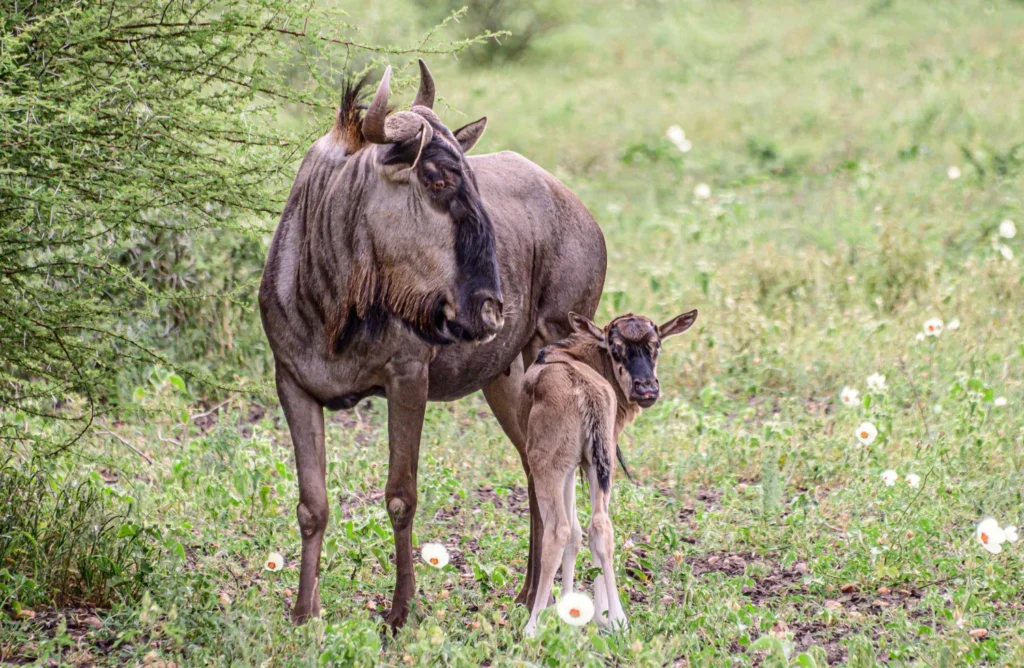
February is peak calving season in the southern Serengeti. Around half a million wildebeest calves are born within a two to three week window, drawing every predator in the ecosystem. If you want the most dramatic wildlife interactions of the year, book a stay at a Ndutu camp for early to mid February.
Weather is warm and dry with occasional afternoon showers. The Northern Circuit is busy but not as crowded as July or August. Southern parks stay green and productive, and the Southern Circuit is a great choice for a quieter trip during this month.
March in Tanzania
The long rains usually begin in mid to late March. Early March is still a good time to travel, with the calving migration continuing and Ndutu camps open. By the end of the month, roads in remote parks turn muddy and some camps start closing for the season.
If you travel in March, aim for the first two weeks and stick to parks with tarmac approach roads like Mikumi and Tarangire. Prices drop noticeably as the month goes on. Photographers with patience are rewarded with dramatic skies and lush green landscapes.
April in Tanzania
April is the wettest month in Tanzania. Long rains fall heavily, dirt tracks become impassable in many parks, and many seasonal camps close entirely. This is not a good month for a first safari.
The exceptions are the Ngorongoro Crater and Tarangire National Park, both of which stay accessible on all weather roads. Birders love this month because European migrants are still present and residents are in breeding plumage. Prices are at their lowest for the year. If your budget is tight and you are flexible, an April trip focused on the crater and Tarangire can be excellent value.
May in Tanzania
The rains ease in May but continue into the first two weeks. From mid May onwards, conditions improve rapidly. The migration begins moving north through the western corridor of the Serengeti, though sightings are unpredictable in transition.
Late May is a shoulder season sweet spot. Camps that closed in April are reopening, rates are still discounted, and the landscape is at its greenest. Book carefully, focus on the Northern Circuit or Southern Circuit parks with good all weather access, and be flexible about camp choices.
June in Tanzania
June marks the start of the peak safari season. The rains are gone, grass is drying out, and wildlife starts concentrating around water. Days are sunny, mornings and evenings are cool. This is one of our favourite months for a Tanzania safari because you get almost peak conditions without peak prices.
The migration is in the central and western Serengeti, moving steadily north. Mikumi, Ruaha and Nyerere are in excellent condition with strong wildlife viewing and low visitor numbers. Book at least three months in advance for popular lodges.

July in Tanzania
July is the beginning of high season proper. The Mara River crossings begin, usually in the second half of the month, though timing varies year to year. Northern Serengeti camps fill up. Prices rise. Days are dry and sunny.
If your priority is the wildebeest migration river crossings, July and August are the months to plan for. If you prefer smaller crowds and can skip the crossings, look south instead. Ruaha in July offers some of the best predator viewing on the continent with a fraction of the visitors.
August in Tanzania
August is peak safari season. Weather is at its most reliable, wildlife viewing is at its best, and the migration is crossing the Mara River. Book everything a year in advance if you can. Every lodge, every camp, every guide is in demand.
Southern Circuit parks are still much quieter than the north even in August, which is why we often recommend travellers combine a few nights in the Southern Circuit with a shorter Northern Circuit trip. You get the best of both without paying peak prices at every stop.
September in Tanzania
September is a top month for a Tanzania safari. Weather is dry, temperatures are pleasant, the migration is still in the northern Serengeti, and school holiday crowds have gone home. If you are choosing between August and September, September usually wins on value and comfort.
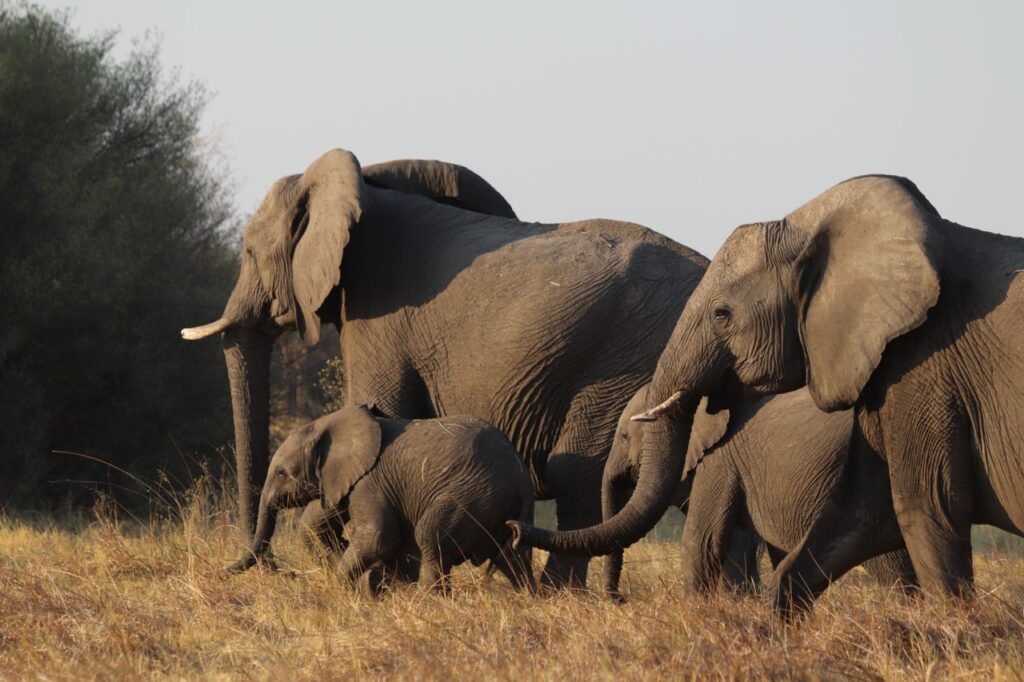
All Southern Circuit parks are in prime condition. This is our favourite month to send travellers to Ruaha for classic dry season predator action and to Mikumi for elephant herds gathering at the last permanent waterholes.
October in Tanzania
October is the last month of the long dry season and one of the most rewarding. Water sources are almost fully dry, wildlife concentration around the remaining waterholes is intense, and the migration begins its return south into the central Serengeti. Days are hot and dusty.
Book by June if you want the best camps. Southern Circuit parks in October are exceptional for photography, with golden light, huge elephant herds, and abundant predators. Reach out through our contact page to discuss an October itinerary.
November in Tanzania
The short rains usually begin in early November. Showers are brief, mostly afternoon, and rarely disrupt game drives for long. The landscape turns green almost overnight, resident wildlife stays put, and migratory birds arrive from the northern hemisphere.
November is a shoulder month with real advantages. Prices drop, camps have space, and photography conditions are dramatic. The migration is moving south through the central Serengeti. This is a very good month for a first safari on a moderate budget.
December in Tanzania
Early December continues the pattern of short rains and green landscapes. From mid December, the weather starts to dry out and the migration approaches the southern Serengeti. Christmas and New Year are busy and expensive at the top lodges, but the first two weeks of the month are quiet and reasonably priced.
If you want a Christmas or New Year safari, book by June or July. If you can travel in the first half of the month, you will find good rates and few crowds.
What is the best time for the wildebeest migration?
The wildebeest migration is a year round event, not a single moment. Roughly 1.5 million wildebeest and 300,000 zebra move in a circle through the Serengeti and Kenya’s Masai Mara in response to the rains. Where they are depends on the month.
- January and February: Southern Serengeti and Ndutu, calving season.
- March: Southern and central Serengeti, still calving.
- April and May: Central and western corridor, moving north.
- June: Western corridor, Grumeti River crossings begin.
- July and August: Northern Serengeti, Mara River crossings.
- September and October: Northern Serengeti, some herds cross into Kenya.
- November: Herds return south through the central Serengeti.
- December: Southern Serengeti, arriving for the next calving cycle.
The famous Mara River crossings happen in July, August and September. The calving season, arguably even more dramatic, happens in late January and February. Both are worth planning a trip around.
When is the best time for a Southern Circuit safari?
The Southern Circuit, including Mikumi, Ruaha, Nyerere and Udzungwa, follows the same broad rhythm as the north. The best time is June to October during the long dry season. Ruaha in particular reaches its peak in September and October, when its huge elephant and predator populations concentrate along the Great Ruaha River.
What is different about the south is how it handles the shoulder seasons. Southern parks stay open and accessible in January and February, and even in November and early December, giving you more flexibility than the northern parks. Read our Mikumi National Park safari guide for a full breakdown of one of the easiest Southern Circuit destinations to reach.
Is the rainy season a bad time for a Tanzania safari?
The rainy season is not a bad time in itself. It depends on which parks you visit and what you want to see. The long rains from mid March through April are the most challenging, and we usually suggest travellers avoid this window for a first safari. The short rains from November through mid December are much more manageable and offer real advantages: green landscapes, fewer visitors, lower prices, and excellent bird watching.
If you are a photographer, a birder, or a returning safari traveller who wants a different feel from the peak season, the green season can be the highlight of your safari career. If you have never been on safari before and want the most reliable wildlife viewing, stick to June through October.
How does the weather affect safari planning?
Tanzania sits close to the equator, so temperatures do not swing much through the year. What changes is rainfall and grass height, both of which affect wildlife visibility. In the dry season, grass is short and animals gather at water, so viewing is easy. In the wet season, grass is tall and water is everywhere, so animals disperse and hide.
Altitude also matters. The Ngorongoro Crater rim sits at 2,400 metres and can be cold at night year round. Bring a fleece and long trousers no matter which month you travel. Coastal areas and Zanzibar are hot and humid throughout the year, with the driest months being June to September.
Choose your month based on your priorities, not just the calendar. If you want the migration crossings, come in August. If you want budget and green landscapes, come in November. If you want the most reliable overall safari, come in September. There is no single answer, just the answer that fits your trip.
How to pick your safari month step by step
Choosing when to travel comes down to matching a few factors. Work through these five questions and you will land on the right month.
- What is your priority? Wildlife viewing, migration crossings, calving, birds, photography, budget, or a mix.
- How flexible are your dates? If work or school locks you in, that decides half of the equation.
- How much do you want to spend? Peak season doubles the price of most camps.
- How comfortable are you with rain? Some travellers embrace it, some hate it. Be honest with yourself.
- Where do you want to go? Northern Circuit peaks in July and August. Southern Circuit peaks in September and October. Beach adds a Zanzibar consideration.
Once you have those five answers, you have your month. Get in touch and we will build the itinerary around it.
Plan your Tanzania safari with HHM Wildlife Safaris
The best time to visit Tanzania for a safari depends on what you want your trip to feel like. We have run trips in every month of the year and know what each one is really like, not just what the online guides say. If you would like tailored advice for your dates, budget, and priorities, we would love to help you plan.
Send us a message on our contact page or WhatsApp us on +255 621 080 188. Share your rough dates and what matters most to you, and we will suggest routes, camps, and timing that fit. Every itinerary is custom, and there is no obligation to book.

Frequently asked questions
What is the cheapest month for a Tanzania safari?
April is the cheapest month, followed by May and early November. Many camps offer green season rates that can be 30 to 50 percent lower than peak. The trade off is heavier rain, muddy tracks in remote parks, and some camp closures during April.
Is it hot in Tanzania during safari season?
Daytime temperatures in June to October usually sit between 20 and 28 degrees Celsius in most parks. Nights and early mornings are cool, sometimes as low as 8 to 10 degrees at higher altitudes like Ngorongoro. Bring layers and expect big swings between morning and midday.
Can you see the Big Five year round in Tanzania?
Yes, the Big Five, that is lion, leopard, elephant, buffalo and rhino, are present year round in the parks where they occur. Rhino are only reliably seen in the Ngorongoro Crater. Dry season improves your chances of clean sightings, but a good guide finds them in any month.
When is the best time for a Zanzibar and safari combination?
June to October and January to February are the best months for combining a Tanzania safari with a Zanzibar beach holiday. The weather is dry on both the mainland and the coast, and the water is clear for diving and snorkelling. April and May bring heavy rain to Zanzibar and are best avoided.
Is October a good time for a Tanzania safari?
Yes, October is one of the best months of the year. The dry season is at its peak, wildlife concentrates at the last waterholes, and the migration is beginning its return south. Book at least six months ahead as the best lodges fill quickly.
Which month is best for photography in Tanzania?
February for calving drama and green landscapes, September for classic golden light and predator action, or November for dramatic skies and lush colour. Each has its own look, and serious photographers often plan two trips a year to catch different seasons.
When should you avoid safari in Tanzania?
Mid March through mid May, during the heaviest of the long rains, is the one window we usually suggest avoiding for a first safari. Roads become difficult, some camps close, and viewing is unpredictable. If you must travel then, focus on the Ngorongoro Crater and Tarangire.
How far in advance should you book a Tanzania safari?
For peak season travel in July, August or September, book eight to twelve months ahead. For shoulder season in June or October, four to six months is usually enough. Green season trips in November or February can often be arranged with two to three months notice.